
⏱️ Read Time: 3 Mins
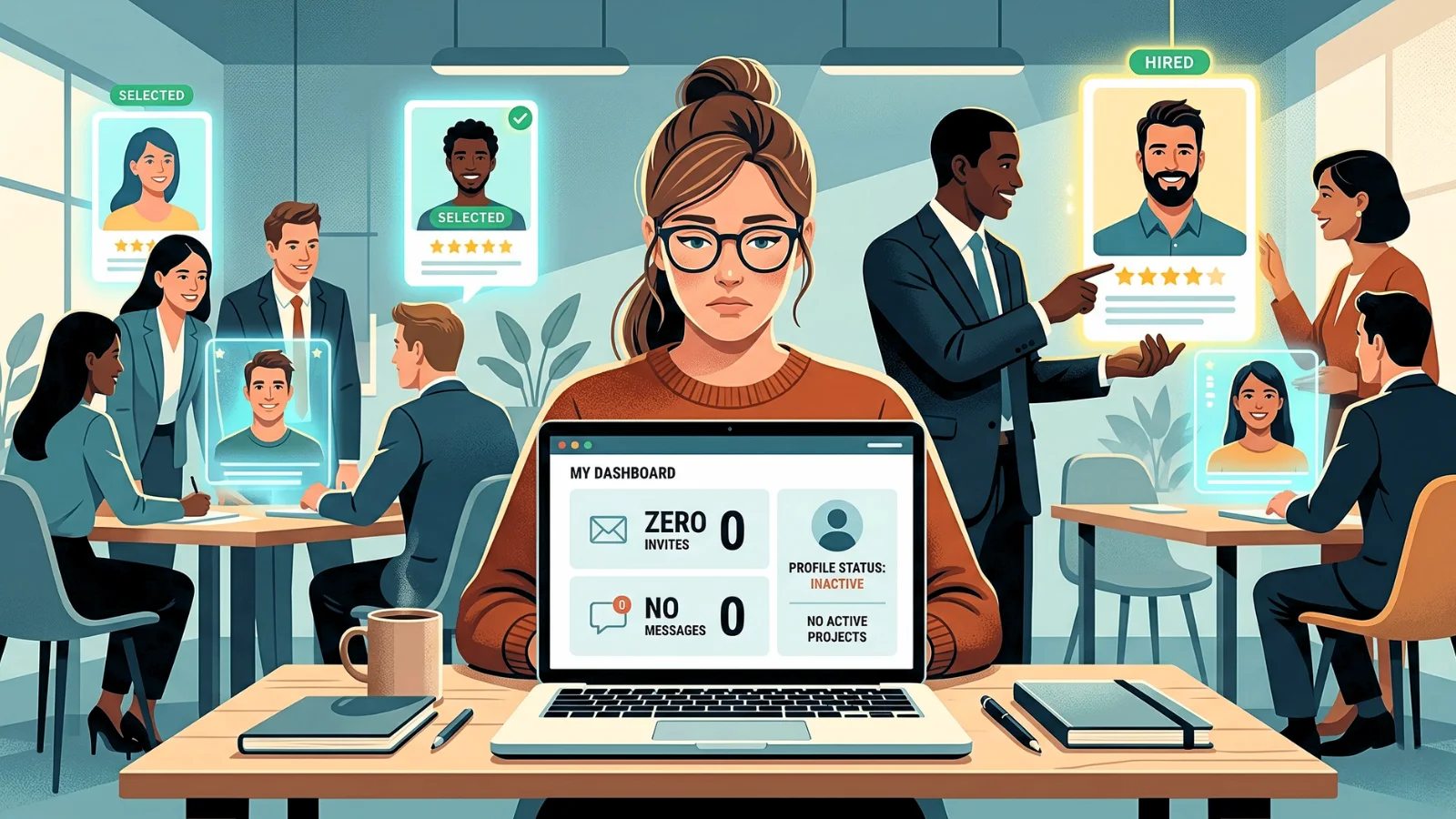
The email arrives confirming the profile is live. The dashboard loads. Zero invites, zero messages, and zero profile views follow.
“Approved” simply means the account passed basic identity verification and automated spam checks. It grants legal permission to exist within the system. It does not grant visibility to paying clients.
How search actually functions
Clients looking for talent do not see a chronological list of recent sign‑ups. They interact with a tightly controlled algorithm designed to mitigate financial risk for the platform.
The marketplace sorts freelancers based on a hierarchy of trust signals. An established account with a high Job Success Score and verified earnings will consistently anchor near the top of a client’s search results.
A newly approved profile carries zero data. There is no recent work history, no private feedback metric, and no proof of reliability. The algorithm responds by burying the account deep in the search results, a place most clients never reach.
The proposal black hole
The immediate reaction is to start firing off applications to active job postings. But submitting a proposal does not guarantee the recipient will ever read it.
When a high‑quality job goes live, fifty to one hundred applications flood the client dashboard within hours. The interface only displays a brief preview of the top few submissions.
If a profile lacks an earnings badge or a proven success score, the platform automatically filters the proposal down the list. Clients must actively click to reveal those hidden submissions, and most stop reading after the first five.
- Applied to Jobs but No Response Anywhere? What’s Actually Happening
- Ghost Job Listings Explained: Why Some Jobs Are Never Filled
- Why Employers Filter Out Most Applicants Before Reviewing Resumes
- Remote Support Jobs Hiring Now — What Actually Gets You Selected
- Entry-Level Tech Jobs From Home: What Actually Gets You Selected
Bidding and placement
This dynamic is governed by the Connects system. Freelancers purchase these digital tokens to apply for work and actively bid against each other for the top visible slots in a client’s inbox.
A new account spending standard tokens competes against established agencies dropping maximum bids to secure the first three visible positions. Pricing lower than market initially without a proven track record often results in paying a premium just to remain unseen.
Breaking down platform myths
The most damaging misconception is that a perfectly written, highly specialized profile generates organic traffic. Superior copywriting does not override raw algorithmic weight.
A flawless portfolio attached to a brand‑new account remains invisible until it generates its first dollar. The system rewards economic activity, not aesthetic effort.
Another false assumption is that sending massive volumes of proposals eventually forces a hire. Volume only works if the account possesses enough ranking weight to actually surface in the client’s queue.
Forcing algorithmic recognition
Waiting for organic invites is a failed strategy. Profiles do not passively gain traction just by aging on the server.
The only mechanism that alters exposure is securing an initial contract and receiving flawless private feedback. That first transaction provides the essential data point the algorithm requires to calculate a Job Success Score.
Securing that first project often requires pricing lower than market initially to convince a client to take a risk on an unproven account. It functions as the cost of acquiring platform data, not a permanent business model.
Until a verified payment clears and the algorithmic rating updates, the profile is essentially locked out of the competitive tier. The entire focus must be securing that initial completed contract, because without it, the account operates with almost no visibility.

Sarah Johnson is an education policy researcher and student-aid specialist who writes clear, practical guides on financial assistance programs, grants, and career opportunities. She focuses on simplifying complex information for parents, students, and families.