
⏱️ Read Time: 4 Mins
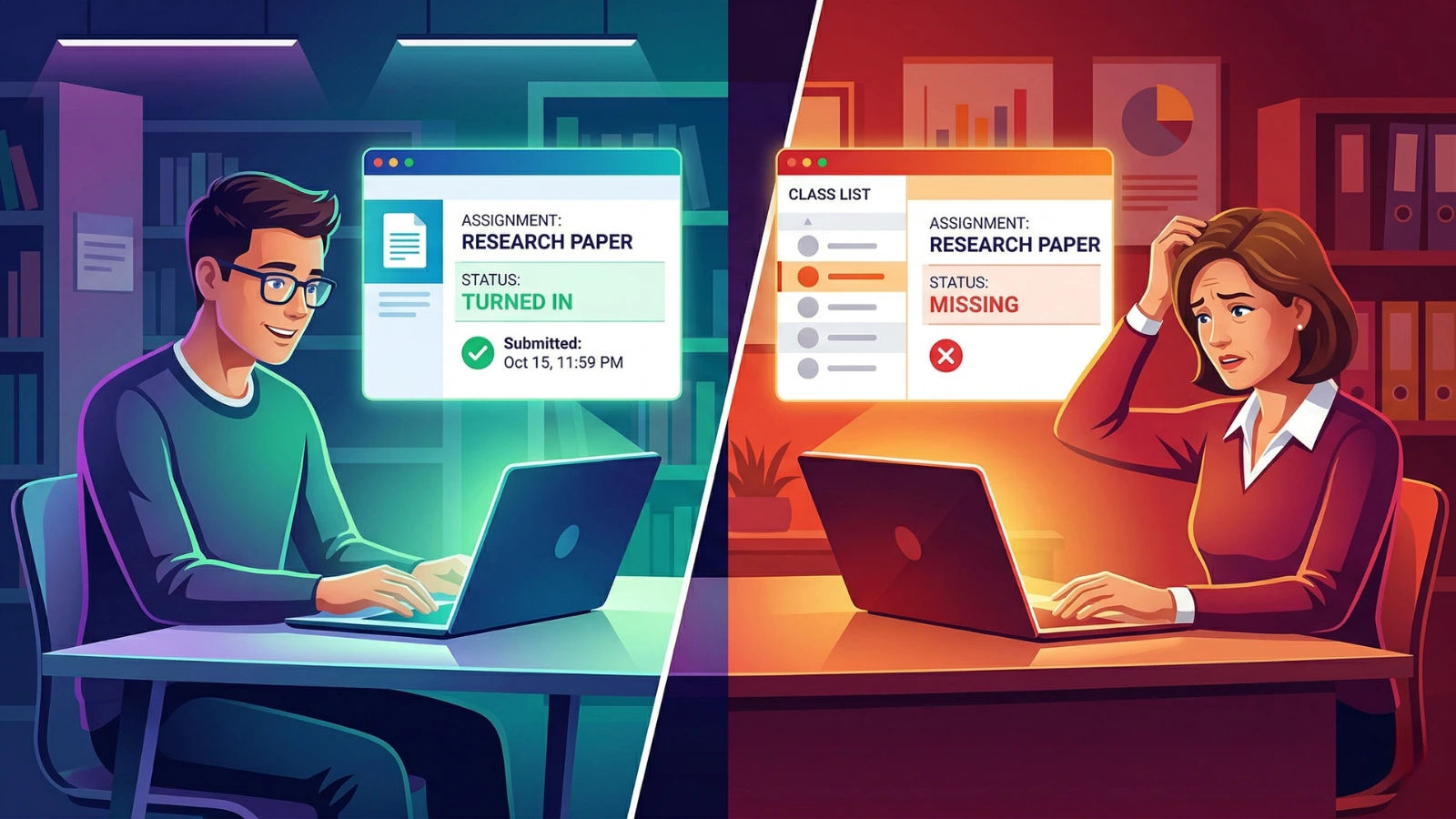
The submit button gets clicked right before the midnight deadline. The screen confidently displays a clean “Turned In” status. Twelve hours later, a zero populates the grade book alongside a bright red “Missing” label.
Panic immediately sets in, followed by frantic emails blaming a catastrophic software glitch. The immediate assumption is that the platform somehow lost the work in transit. In many cases, the digital handoff never actually occurred in the first place.
A massive disconnect exists between what a student clicks and what the server actually receives. Hitting the final submission button merely flips a digital switch indicating the assignment is done.
It does not actively verify that a document was successfully attached to that specific action. This creates the most common failure point on the entire platform.
The “Turned In” status is nothing more than a label. If a document is created but fails to link properly before the final button is pressed, the system eagerly registers a blank submission.
The platform dutifully reports the task as complete on the user’s end. On the instructor’s dashboard, it registers as a completely empty folder, instantly triggering an automatic missing penalty.
Sync delays and the offline trap
A deeply ingrained misconception is that platform status updates are instantaneous and infallible. The software relies heavily on constant, stable server communication to verify data integrity.
A device operating on a fluctuating Wi‑Fi signal will often cache actions locally to prevent data loss. A laptop closed immediately after hitting submit severs the connection before the final file upload sequence completes.
The local browser remembers the click. It will even display the assignment as completed upon the next login, projecting a false sense of security.
However, the central server never received the actual data payload. The interface can show a completed status even when the upload didn’t fully sync.
The multiple account conflict
Browser environments in 2026 are heavily tangled webs of personal and educational profiles. A significant portion of missing files stems directly from account authorization conflicts rather than actual technical failures.
A document drafted under a personal Google account cannot cross the strict security boundaries into a managed educational domain. The file exists, but the backend permissions block the transfer entirely.
The assignment interface will still allow the physical button click, but the attached file gets aggressively stripped out during the transfer process. The instructor simply receives a restricted access error or a dead link.
The reality of the teacher dashboard
There is a profound operational difference between the student view and the grading interface. The submission side displays a neat, reassuring checklist of completed tasks.
The instructor side operates as an aggregate dashboard of incoming raw files. When a submission is marked missing on the grading side, the automated sorting system could not detect a readable file associated with that specific prompt.
Teachers do not have access to a hidden backend database to recover lost student work. If a readable file is not visibly attached in their primary grading window, it isn’t visible in their system at all.
Securing actual confirmation
Relying on the initial “Turned In” text is a fundamentally flawed strategy. Actual confirmation requires verifying the digital payload, not the button state.
The only definitive proof of delivery involves navigating completely away from the assignment page and returning fresh. Viewing the actively linked attachments under the finalized submission status reveals exactly what the server holds.
Fixing a dropped submission requires pulling it back and submitting again correctly. The process demands recalling the submission, verifying the specific document link is active, and forcing a completely new upload sequence.
Assuming the technology will seamlessly fix human errors is a dangerous academic gamble. The interface is built to record clicks, not to ensure the work is actually inside the digital envelope. If a file isn’t actively verified post‑submission, the platform simply delivers an empty box.

Sarah Johnson is an education policy researcher and student-aid specialist who writes clear, practical guides on financial assistance programs, grants, and career opportunities. She focuses on simplifying complex information for parents, students, and families.