
Published: December 13, 2025
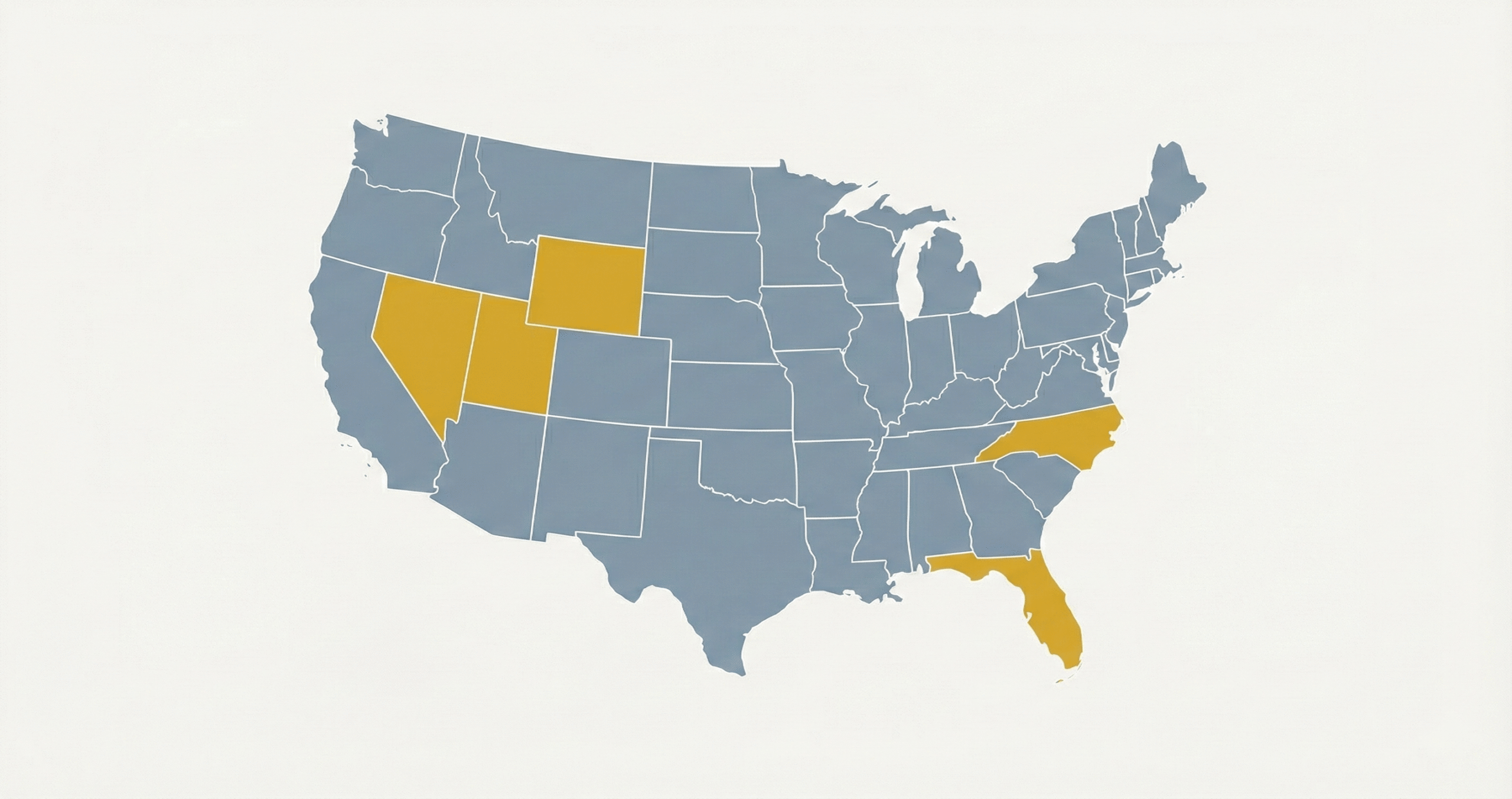
Headlines focusing on the national student debt crisis often obscure a quieter, divergent reality: specific state legislatures are actively suppressing public college costs. For students planning for the 2025–26 academic year, identifying these controlled markets provides a more accurate financial baseline than national averages.
For this report, affordability refers to published in-state tuition and mandatory fees so comparisons remain consistent before aid is applied.
Data Scope and Methodology
We analyzed 2025–26 institutional fee schedules and NCES/IPEDS reports for public four-year institutions. The metric is strictly tuition and mandatory fees for in-state residents, excluding room and board.
Data accessed between November–December 2025.
Florida
State policy, not market pressure, has kept undergraduate tuition low across Florida’s public universities. This stability is not accidental; it is the result of policy decisions that have effectively frozen tuition rates at public universities for nearly a decade.
According to the State University System of Florida, the 2025–26 resident undergraduate tuition at major hubs like the University of Florida has remained near $6,380 annually for a standard 30-credit load.
However, a tuition freeze does not equate to a frozen cost of living. While the academic bill is exceptionally low, housing costs in university towns like Gainesville and Tallahassee have risen.
Students must calculate the total Cost of Attendance (COA), as rent in these markets may exceed tuition costs.
Wyoming
Large state subsidies, rather than student charges, drive Wyoming’s unusually low student share of costs. The state’s public higher education system utilizes significant funding to keep the resident price drastically lower than the national average.
The University of Wyoming’s 2025–26 fee schedule lists the resident block tuition rate at approximately $2,700 per semester, exclusive of mandatory fees.
When standard fees are added for a full-time academic year, the total academic cost hovers near the $7,800 mark. Unlike coastal states, Wyoming offers a generally lower cost of living, though the state’s Hathaway Scholarship program remains a critical component for reducing net costs further.
North Carolina
North Carolina is currently testing specific legislative models designed to lower barriers at regional campuses. Most notably, the Fixed Tuition Program freezes rates for incoming freshmen at UNC System schools for eight consecutive semesters.
Within this system, the “NC Promise” tuition plan creates a distinct pricing tier. For the 2025–26 academic year, in-state students at specific campuses (such as Western Carolina University) pay a flat tuition rate of just $500 per semester ($1,000 annually), plus mandatory fees.
It is vital to distinguish between the NC Promise campuses and the system-wide average. While the tuition is $1,000, mandatory fees typically bring the total annual cost to ~$3,600 at these locations, compared to ~$9,000 at the flagship UNC Chapel Hill.
Utah
Utah has maintained a pricing structure that balances accessibility with the needs of a rapidly growing student population. The state’s primary public institutions consistently rank among the most affordable in the western United States, with recent data indicating average prices remain under $7,800.
The challenge in Utah is less about tuition and more about geography. Rising costs in the “Silicon Slopes” and Salt Lake City metro areas mean that students saving on tuition may find those savings absorbed by rent.
On-campus housing availability plays an outsized role in total costs in this market.
Nevada
Nevada enters the conversation by keeping credit-hour costs significantly below the typical western state average. Based on the Nevada System of Higher Education’s 2025–26 fee schedules, the per-credit registration fee for lower-division undergraduate courses results in a base tuition significantly lower than neighboring states.
When mandatory service fees are added, the total annual cost for 2025–26 is estimated at roughly $10,300. While higher than the absolute cheapest states on this list, this figure remains roughly $1,300 below the national average for public four-year institutions.
Consolidated Pricing Observations
Across these states, the most affordable options for 2025–26 are those where tuition is controlled by direct legislative intervention rather than market forces. In Florida, Wyoming, and North Carolina, state policy explicitly limits how much universities can charge residents.
Taken together, these figures reflect that low tuition does not automatically equate to a low total cost of attendance. In several of these states, particularly Florida and Utah, rising housing markets in university towns have begun to offset the savings gained from cheap tuition. In practice, savings at the registrar often show up as higher housing bills.
Summary of Estimated Costs (2025–26)
| State | Est. In-State Tuition & Fees | Primary Cost Advantage |
| Florida | ~$6,400 | Long-term legislative tuition freeze |
| Wyoming | ~$7,800 | High state subsidy per student |
| North Carolina | ~$3,600*– $9,000 | “NC Promise” $500/semester option |
| Utah | ~$6,200 – $9,000 | Consistent low base rates |
| Nevada | ~$10,300 | Remains below national avg. ($11,610) |
*Note: Lower figure in North Carolina reflects NC Promise campuses only.
SchoolAidSpecialists.com provides independent analysis based on publicly available tuition data. Figures shown reflect published in-state tuition and mandatory fees only, not total cost of attendance, and may change with state policy or university action; always verify current rates through official university or government sources.

Sarah Johnson is an education policy researcher and student-aid specialist who writes clear, practical guides on financial assistance programs, grants, and career opportunities. She focuses on simplifying complex information for parents, students, and families.