⏱️ Read Time: 4 Mins
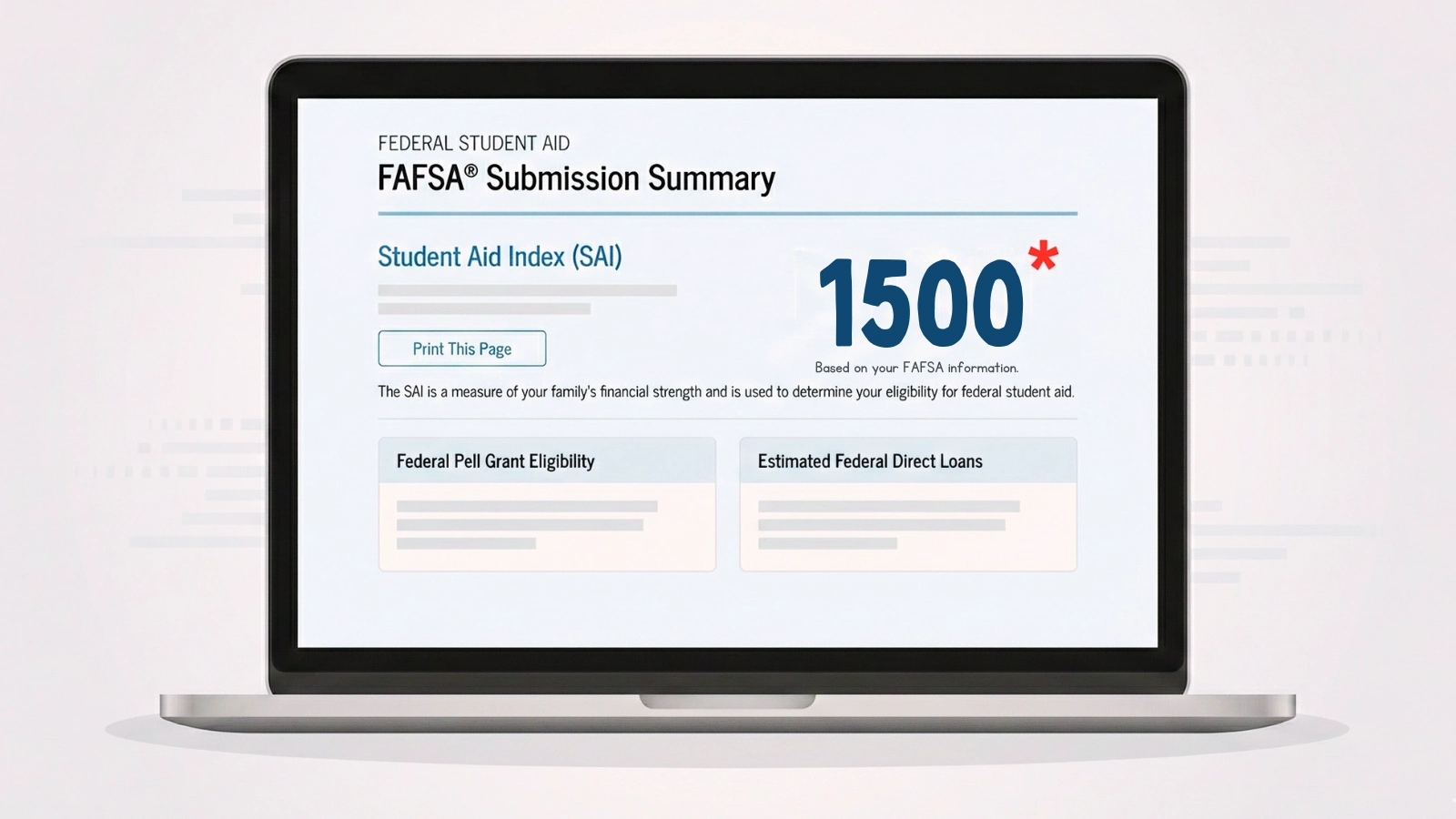
An asterisk next to the Student Aid Index on a FAFSA submission summary means the application has been flagged for verification. Federal aid won’t disburse until the college receives additional documentation and confirms the information matches. Roughly one-third of FAFSA applicants are selected for verification each year. Selection doesn’t mean rejection. Ignoring it delays disbursement.
Verification requires submitting tax transcripts, income documents, and verification worksheets directly to the college financial aid office. The Department of Education doesn’t contact applicants for these materials. Schools handle the process independently, and each one sets its own deadlines. The file does not move until the paperwork does.
The asterisk appears without explanation on the confirmation screen. No context. No timeline. Just a symbol that leaves applicants waiting for direction.
How Selection Actually Works
Federal algorithms flag applications based on data inconsistencies, random sampling requirements, or patterns that trigger automatic review. The Department of Education doesn’t publish selection criteria, and the rules change each award year based on congressional priorities and fraud prevention models.
Applications reporting income near federal poverty thresholds get selected more often. Families with significant year-over-year income changes or unusual tax deductions may trigger flags. When FAFSA data doesn’t align cleanly with IRS records pulled through the Direct Data Exchange, verification often follows. Some selections are purely random, part of a broader sampling requirement built into the federal system.
Students can’t predict it. They can’t appeal the selection.
Colleges Run Verification, Not the Federal Government
Individual schools collect documents and verify accuracy under federal guidelines. The Department of Education mandates verification requirements each year, but colleges control how the process runs. That creates massive variation in response times, communication clarity, and deadline enforcement.
Most schools request federal tax transcripts from the IRS, W-2 forms, and verification worksheets asking applicants to reconfirm household size, number of family members in college, and other FAFSA responses. Some schools add extra requirements based on specific flags. Financial aid staff compare submitted documents against original FAFSA entries and flag discrepancies that require corrections.
Pell Grants don’t disburse during verification. Direct Loans don’t process. Schools can’t package aid until verification closes, and most set internal deadlines weeks before federal cutoffs to ensure aid releases before tuition bills come due.
The Timeline Problem Nobody Mentions
Verification overlaps with enrollment deadlines, housing deposits, and course registration. Students selected in February who wait until June to submit paperwork may find themselves locked out of classes or unable to secure housing because their accounts have holds.
Schools process verification in the order requests are completed. Spring and summer create bottlenecks when thousands of applicants submit documentation simultaneously. A process that takes two weeks in March can stretch to six weeks in July. Financial aid offices rarely fast-track cases simply because someone waited.
And if documentation reveals inconsistencies, the file pauses again. Tax transcripts showing income that doesn’t match the FAFSA trigger mandatory corrections. Those corrections change the Student Aid Index, which can reduce aid eligibility. Schools can’t backdate packages to protect original awards.
Documentation Standards Don’t Bend
Verification worksheets require exact data and official signatures. Schools reject incomplete forms, unsigned documents, or materials with name mismatches between FAFSA records and tax filings. Applicants who filed taxes jointly must provide full transcripts for everyone on the return, even when only one person’s income affects the Student Aid Index.
Non-filers face additional scrutiny. Schools require IRS confirmation of non-filing status plus alternative documentation like employer wage statements or government benefit letters. Self-employed families or applicants with complex income sources often get stuck in extended reviews requiring business tax schedules or third-party verification.
Discovering errors during verification means correcting the FAFSA and potentially amending tax returns. Schools require documentation for claimed figures. Explanations don’t replace records.
Institutional Capacity Determines Speed
Well-funded financial aid offices with modern systems and adequate staffing finish verification quickly. Under-resourced schools managing high caseloads with limited staff send generic emails and take weeks to respond to basic questions. The federal requirement is identical. The experience isn’t.
Large state universities processing thousands of verifications can take six weeks or longer during peak periods. Small private colleges with dedicated verification staff might close cases in ten days. Transfer students and late applicants wait longest because they enter after priority populations have been served.
The asterisk is federal policy. What happens next, including communication, processing speed, and internal timelines, depends on the school’s administrative capacity. Schools can’t waive verification requirements, but they control whether the process feels manageable or impossible.
Verification isn’t optional, and the window for handling it is shorter than most applicants realize. Schools move forward with or without individual files. The aid is real, but it’s conditional on completing the process before institutional deadlines pass.

Sarah Johnson is an education policy researcher and student-aid specialist who writes clear, practical guides on financial assistance programs, grants, and career opportunities. She focuses on simplifying complex information for parents, students, and families.