⏱️ Read Time: 3 Mins
Many families assume federal work-study will pay tuition directly. The moment of relief usually hits right after the student portal login. A high school senior stares at their 2026–2027 financial aid package, does some quick mental math, and breathes out.
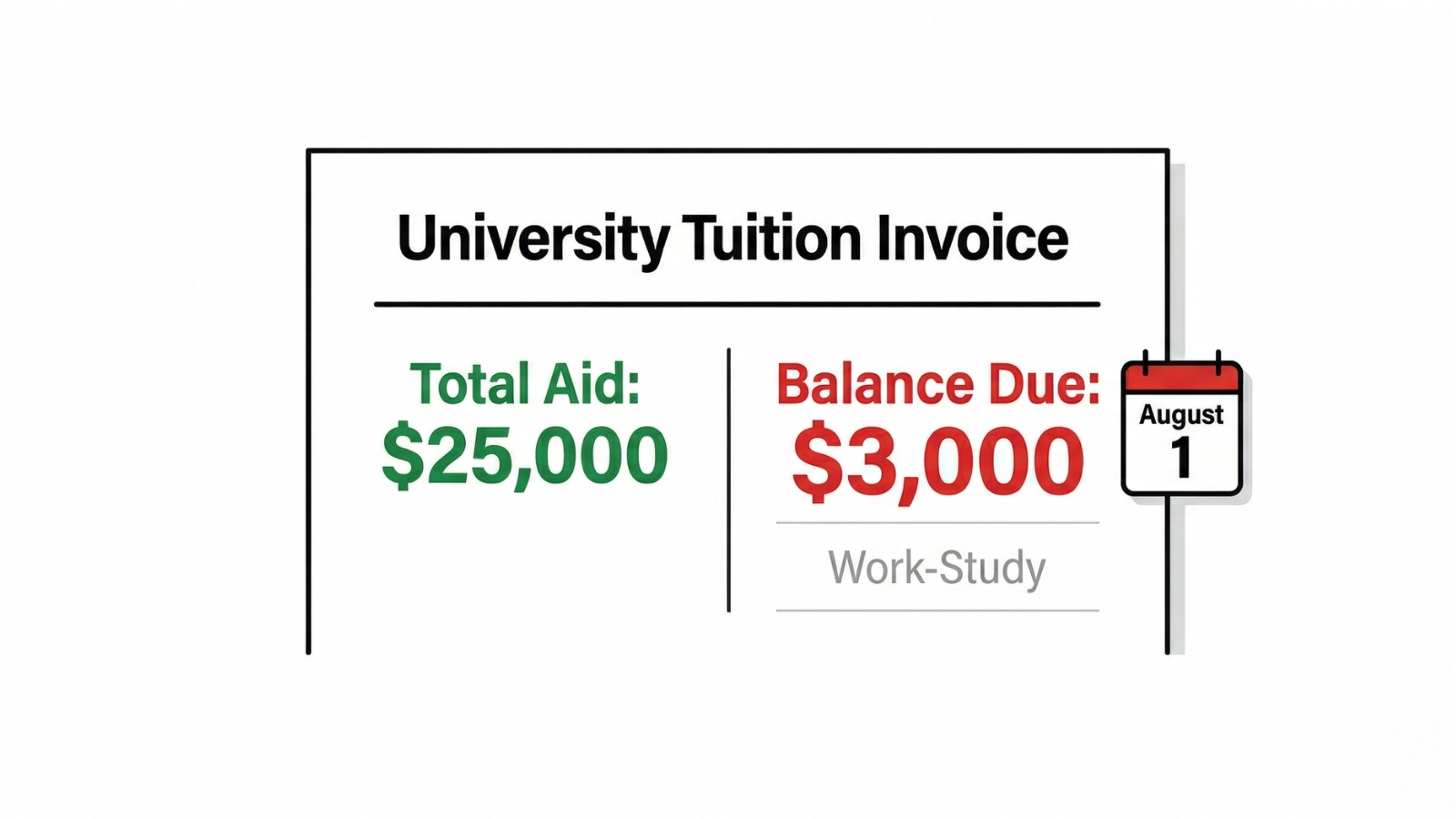
The total aid offered is $25,000, perfectly matching their $25,000 tuition cost.
It looks like a clean, seamless break. The grants and federal loans stack up, and a final line item for Federal Work-Study rounds out the remaining balance. Families naturally assume this means the university is fully paid for the academic year.
This is where the architecture of financial aid completely misaligns with university billing.
That work-study line item is not a guaranteed grant, nor is it an upfront tuition credit. It is a packaging gap that inflates the perceived total and leaves thousands of students scrambling on Day One.
The Mechanics of the Subsidized Paycheck
To understand the trap, you have to look closely at the mechanical routing of these funds. Families trying to figure out how does federal work study pay out in real-world practice quickly discover that this specific aid bypasses the bursar entirely.
It is simply a federal authorization allowing a student to earn a subsidized wage over time. It must be earned hour by hour, shift by shift, typically paying out a standard minimum wage via a bi-weekly paycheck.
That money lands directly in the student’s personal checking account.
While some institutions do allow students to authorize formal payroll deductions to route earnings back to their student account, the funds are never credited upfront. The university billing software operates completely blind to the unearned award.
The August Tuition Deadline Shock
The system friction hits peak intensity in late summer, just weeks before the fall semester begins. Students log into their university payment portal expecting a zero balance, only to discover a massive financial shortfall.
They immediately flood the financial aid office phones asking why isn’t work study on my tuition bill when it was clearly listed in their award package.
The math simply does not align with the calendar. Consider the reality of trying to pay an upfront bill with a slow-drip wage:
August 1: The university demands the final $3,000 tuition balance to secure fall enrollment.
September 15: The student finally gets hired and works their first 10-hour week.
October 1: The first work-study paycheck clears for a mere $150.
The August billing deadline requires hard cash, cleared loans, or an official payment plan. Unpaid balances trigger immediate financial holds, blocking students from registering for classes, acquiring meal plans, or moving into dorms.
The award letter total and the billing system operate on two completely different timelines.
The Award Is Not a Job Offer
The hardest truth about the federal system is the hiring mechanic. Having an award letter does not mean the student actually has a campus job waiting for them on arrival.
They are essentially handed a hunting license to compete against thousands of peers for highly limited positions. Students must actively scour the campus job board, submit resumes, and interview for library desks or dining hall shifts.
If they fail to secure a position during the chaotic first weeks of school, the entire award amount simply vanishes. The government does not cut a check for the unused balance.
Even if a student lands a job and maxes out their weekly shifts, families who assume work-study will pay tuition directly eventually run into the wall of a bi-weekly payroll cycle. You cannot pay yesterday’s massive tuition bill with tomorrow’s minimum wage shift.
Rebalancing the Math Before You Accept
Evaluate a financial aid package by manually stripping it apart before clicking accept in the portal. Subtract the entire work-study amount from the total aid offered to reveal the actual out-of-pocket gap.
This adjusted, stripped-down number is the true cost required to clear the fall semester billing deadline.
If that gap triggers a shortfall, the immediate structural fix is a university installment plan. Spreading the deficit across monthly payments provides the necessary cash flow to satisfy the bursar by August.
Beyond payment plans, covering the day-one tuition deficit requires tapping Unsubsidized federal loans or external cash. Protect the immediate enrollment status first, and treat the future campus job hunt strictly as a secondary allowance for daily living expenses.

Sarah Johnson is an education policy researcher and student-aid specialist who writes clear, practical guides on financial assistance programs, grants, and career opportunities. She focuses on simplifying complex information for parents, students, and families.